Construction allowances: how to set them so selections don't eat your margin
An allowance is a placeholder in a fixed-price contract for something the client hasn't picked yet — flooring, counters, lighting, plumbing fixtures. Done well, allowances keep a contract signable before every tile is chosen. Done carelessly, they're the number-one source of end-of-job fights.
See pricing — it's public · Why SelfConstruct
Size allowances from real quotes, not round numbers
A $5,000 'sounds right' lighting allowance is how builders end up explaining a $4,000 overage in month nine. Price allowances the way you price everything else: from your cost history and a real supplier quote for the grade of product this client is actually describing. If they're saying 'leathered granite' in the sales meeting, the counter allowance should be a leathered-granite number, not a laminate number that makes the contract look cheaper.
Write down what the allowance includes
Every allowance line should state what's in it: materials only, or materials plus install? Tax? Delivery? A flooring allowance that silently excluded installation is a dispute with a date on it. One sentence per allowance in the contract prevents almost all of it.
Track selections against allowances in real time
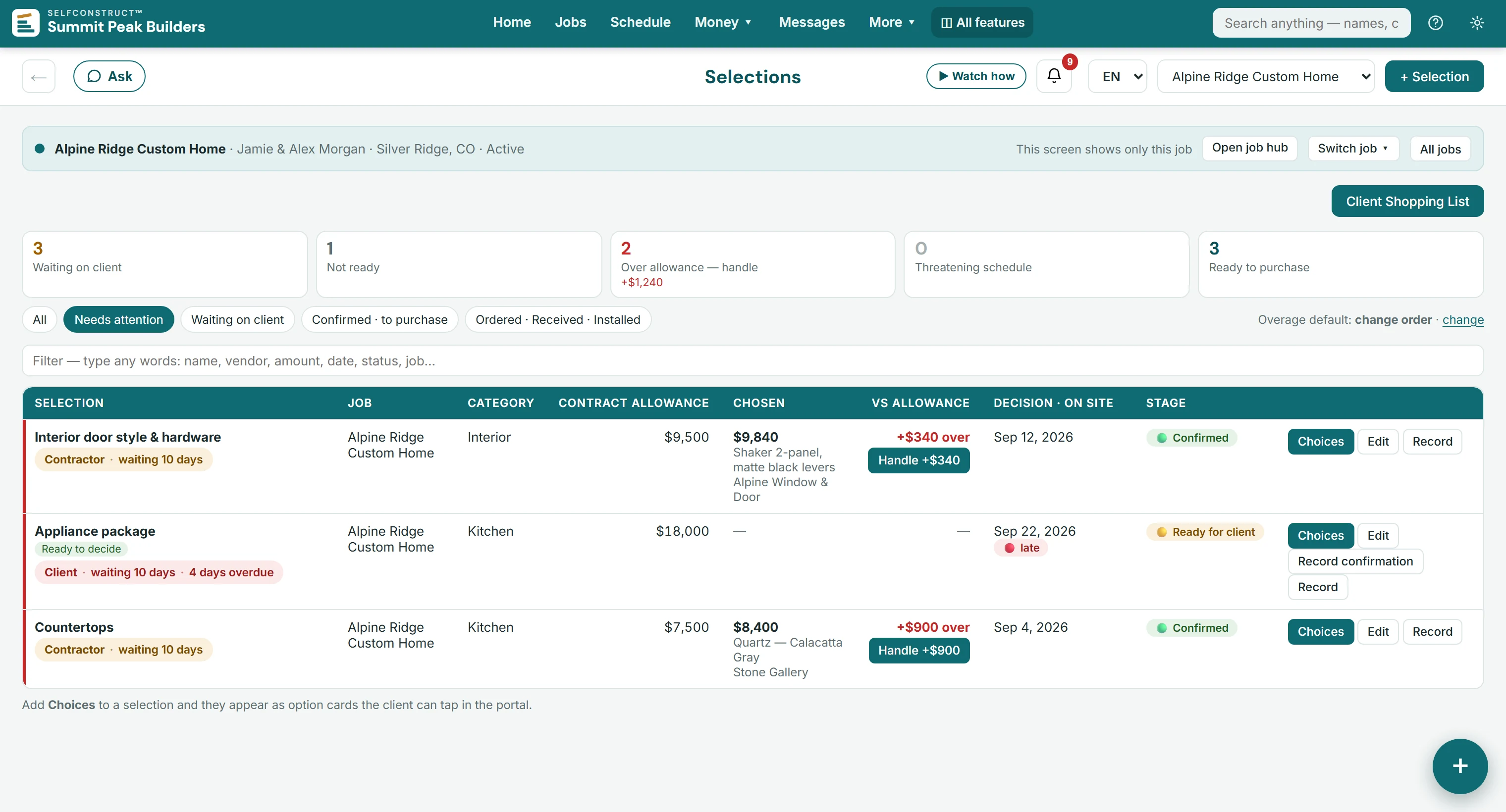
The moment a client picks something, both of you should see the same math: allowance, chosen amount, remaining — or overage. When that math lives in a spreadsheet the builder updates at month-end, clients overspend invisibly and get angry retroactively. In SelfConstruct, clients browse and pick inside their portal, every selection shows the live allowance balance as they choose, and confirmed overages roll into the contract paper trail instead of a surprise on the final invoice.
Handle overages the boring, documented way
Overages aren't a problem — undocumented overages are. The clean pattern: the client confirms a selection that exceeds its allowance, the overage is acknowledged in writing at that moment (a selection confirmation or a change order, per your contract), and it shows up as its own line on the next invoice. Nobody relitigates a signed number.
Fewer, bigger allowances beat many small ones
Ten micro-allowances mean ten reconciliations and ten chances for a miss. Group where it's natural — one finish-plumbing allowance rather than per-fixture lines — and keep genuinely volatile categories (appliances, lighting) separate so one overage doesn't muddy everything else.
Questions builders ask
What happens if the client spends less than the allowance?
The contract should say. The common answer: the difference credits back to the client at the next invoice or at final billing. What matters is that the credit shows up in writing without being asked, because that's the moment clients decide you're honest.
Are allowance overages a change order?
Contracts differ. Some treat every overage as a change order; others use signed selection confirmations and roll the total into billing. Either works — what fails is the version where nothing gets signed.
How many allowances is too many?
If your allowance section runs past a dozen lines on a custom home, you're probably deferring decisions the design process should have settled. More decisions made before signing means fewer variables during the build.
See it working right now
The live demo is a fictional construction company you can click through end to end — including a working client portal — the whole product, running. Pricing is published on the site: $299/mo per company, unlimited users, 50 GB of storage included.
Related
Explore SelfConstruct
© 2026 SelfConstruct™ · selfconstruct.app · Contact · Security · Privacy · Terms
hello@selfconstruct.app · (720) 919-3396 · SelfConstruct, LLC · PO Box 4158, Granby, CO 80446